
Every time you sign up for a website, you give away a little piece of your privacy. Your email address becomes a target for spam, for data brokers, for tracking, and sometimes even for hackers.
But what if you could sign up without using your real email at all?
That’s exactly what temporary email addresses do. They act like a shield between you and the internet. But the big question is, can temporary emails really protect your privacy online?
In this blog, we will explain everything clearly. No technical words. No confusion. Just the truth about temporary emails, how they protect you, and when they don’t.
What Is a Temporary Email Address?
A temporary email address is a fake, short-lived email that you can use instead of your real one. It works just like a normal email you can receive messages, confirmations, and links but it disappears after some time.
You don’t need to sign up. You don’t need a password. You just visit a service like Zeptemp Mail, and a disposable email is instantly created for you.
Think of it like a one-time phone number. You use it, get what you need, and then it’s gone.
How Does a Temporary Email Protect Your Privacy?
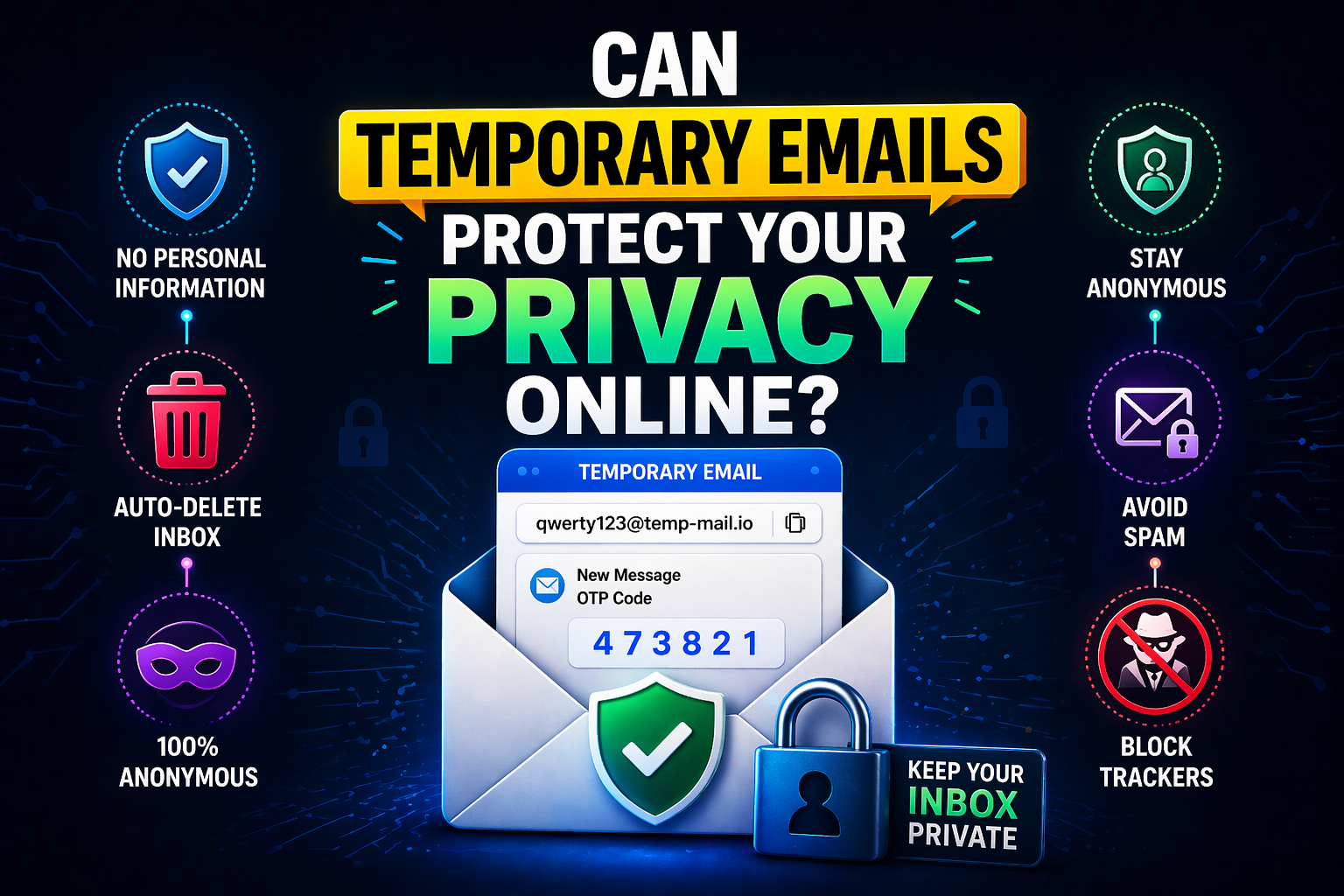
Here’s where it gets interesting. Temporary emails protect your privacy in 4 major ways:
1. Your Real Email Stays Hidden
When you sign up for a random website using your real Gmail or Outlook, that website now has your email forever. They can sell it, share it, or lose it in a data breach.
With a temporary email, your real inbox stays completely private. The website only gets a fake address that expires soon.
2. No More Spam in Your Inbox
Spam is one of the biggest problems for email users today. Once your email is on a marketing list, it’s nearly impossible to get off.
By using a disposable email for promotions, free trials, and one-time sign-ups, your real inbox stays clean. You never get unwanted emails because you never gave them your real address.
3. Protection from Data Breaches
Websites get hacked all the time. When that happens, your email address (and sometimes password) can end up on the dark web.
If you used a temporary email for that website, it doesn’t matter. The leaked email is already expired and useless. Your real email is safe.
4. No Tracking or Profiling
Many companies track your email to build a profile about you. They connect your email to your browsing habits, purchases, and interests.
With a temporary email, there’s nothing to track. Since it’s disposable and anonymous, no one can connect it back to you.
Temporary Email vs. Permanent Email A Quick Comparison
Feature Temporary Email Permanent Email Privacy Level Very High Low to Medium Spam Protection Excellent Poor Requires Sign-Up No Yes ||Long-Term Use|No|Yes| |—|—|—|—| |Risk in Data Breach|Very Low|High| | |Good for One-Time Sign-Ups|Yes|Not Recommended| | |Good for Banking/Work|No|Yes| | |Anonymous|Yes|No| |
👉 Want a deeper look? Read our full guide: Temporary Email vs. Permanent Email — Which Should You Use?
When Should You Use a Temporary Email?
Temporary emails are perfect for many everyday situations. Here are the most common ones:
- Signing up for a free trial you’re not sure about
- Downloading a free eBook or resource that requires email
- Accessing a website that forces you to register
- Testing a web application or email workflow
- Avoiding newsletter sign-ups that come with every purchase
- Using online forums or communities where you don’t want to share your real identity
In all these cases, a temporary email gives you what you need access without giving away your real information.
When Should You NOT Use a Temporary Email?
Temporary emails are powerful, but they are not for everything. There are situations where you should always use your real, permanent email:
- Banking and financial accounts These require long-term access and account recovery
- Work or business emails Professional communication needs a real address
- Social media accounts you plan to keep You’ll need email access for password resets
- Government or legal services Always use verified, permanent contact information
- Important subscriptions Like software licenses or services you pay for
For these situations, stick to your real email. And if you’re worried about privacy for serious accounts, focus on using a strong password and enabling two-factor authentication instead.
Can a Temporary Email Be Traced Back to You?
This is a great question. In most cases no,it cannot.
When you use a service like Zeptemp Mail, no personal information is collected. You don’t log in, you don’t create an account, and your IP address is not linked to the email address in any meaningful way that a regular website can access.
However, keep this in mind:
- The temporary email provider itself may log basic server data.
- If you use the temporary email along with other personal details (like your name or phone number), you can still be identified through those.
- Law enforcement agencies with proper legal requests can sometimes access server logs from providers.
So for everyday privacy like avoiding spam and hiding your email from random websites temporary emails work great. For high-level anonymity (like whistleblowing or sensitive activities), you would need more advanced privacy tools.
Is It Legal to Use Temporary Emails?
Yes, it is completely legal in most countries to use a temporary email address for legitimate purposes.
Using a disposable email to avoid spam, test websites, or protect your inbox is totally fine. However, using it to
- Create fake accounts to harass people
- Bypass bans on platforms
- Commit fraud or any illegal activity
…is not legal and not ethical. Always use temporary emails responsibly.
Bonus Privacy Tip: Use a Username Generator Too
Your email address is not the only thing that can reveal your identity online. Your username can also be traced back to you if you reuse the same one across different websites.
That’s why we built a username generator tool so you can create unique, random usernames for every website you visit. Combine this with a temporary email, and your online identity becomes much harder to track.
How to Check If an Email Is Real or Fake
Sometimes you receive an email and you’re not sure if it’s legitimate. Or maybe you want to verify if an address is valid before sending something important.
Our email detector tool can help you check and understand email addresses better whether you’re testing your own system or verifying incoming messages.
Comparison: Top Reasons People Use Temporary Emails
Reason % of Users (Estimated) Avoid Spam 65% Sign up for free trials 55% Protect inbox privacy by 50%. Access gated content 40% test websites/apps 30% Avoid newsletter sign-ups 45%
These numbers show that most people use temporary emails for completely normal, everyday privacy reasons not anything suspicious.
Tips to Maximize Your Privacy Online
Temporary emails are just one piece of the privacy puzzle. Here are a few more tips to stay safer online:
- Use a strong, unique password for every account.
- Enable two-factor authentication on important accounts
- Use a VPN when browsing on public Wi-Fi
- Avoid clicking unknown links in emails
- Use a temporary email for any non-essential sign-up
- Generate unique usernames using our Username Generator so your identity is harder to connect across websites.
- Regularly check if your email has been in a data breach.
Small habits lead to big privacy improvements over time.
Frequently Asked Questions (FAQs)
❓ Can temporary emails really protect my privacy?
Yes, for most everyday situations. They hide your real email from websites, prevent spam, and reduce your risk in data breaches. They are not a complete anonymity tool, but they offer strong basic privacy protection.
❓ Is Zeptempmail safe to use?
Yes. Zeptempmail does not require you to create an account or share any personal information. A temporary email is automatically generated for you.
❓ How long does a temporary email last?
Temporary emails are designed for short-term use. They expire after a certain period automatically. This is actually a privacy feature no old data is stored.
❓ Can I send emails using a temporary email address?
Most temporary email services, including Zeptempmail, are designed for receiving emails only. They are not meant for sending messages.
❓ What happens to my emails after the temporary address expires?
All emails are automatically deleted when the temporary address expires. This ensures your data is not stored or accessible to anyone after that period.
❓ Can websites detect that I’m using a temporary email?
Some websites use email validation tools to block disposable email addresses. If a website blocks temporary emails, you will need to use your real address for that specific sign-up.
❓ Are there risks to using temporary emails?
The main risk is forgetting to use a permanent email for important accounts. If you sign up for something important with a temporary email, you may lose access later. Always double-check before using a disposable email for anything critical.
❓ How is a temporary email different from a spam folder?
Your spam folder still receives emails to your real address your inbox just hides them. A temporary email means the website never gets your real address at all. It’s a much stronger level of protection.
Final Verdict: Do Temporary Emails Protect Your Privacy?
Yes and quite well for everyday use.
If you’re worried about spam, data breaches, email tracking, or just want to keep your inbox clean, a temporary email is one of the smartest and easiest tools you can use. It costs nothing, takes seconds, and gives you strong privacy protection for casual online activity.
Just remember:
- ✅ Use it for one-time sign-ups, free trials, and random websites
- ✅ Combine it with a unique username for better anonymity
- ❌ Don’t use it for banking, work, or important long-term accounts.
Start protecting your privacy today with Zeptempmail—Free Temporary Email Service.
Also read: